Conundrums

The word conundrum recently came to my mind when a prospective patient missed his second scheduled introduction appointment. A conundrum is defined as a tricky or difficult situation.

It is quite the conundrum when one is feeling poorly with symptoms of mental illness, hopes to get help from a health care professional, yet cannot seem to find within what’s necessary to follow through and keep that appointment.

As a nurse practitioner who has been working with mentally ill individuals for many years, I understand that symptoms such as apathy, low motivation, anxiety, and impaired cognitive functions negatively impact a person’s ability to make and keep appointments.

As a health care provider, I naturally encounter my own conundrums.

How do I help someone who wants my help but cannot seem to make it to our scheduled sessions, or someone who takes weeks or months to respond to written correspondence?

How much of my available resources should go to helping those who seem to be unable to show up for the help available to them?

Generally speaking, I steer away from spending much of my time sending reminders to my patients. I believe that people are capable of taking some responsibility for their commitments to others and that once shown how, motivated people find ways to set their own reminders. “I have plenty of commitments and appointments to manage in my own life,” I tell myself.

That said, I also believe that some people who need mental health care also often have a lot of difficulty with making and keeping appointments and that they might benefit from some support with this for a while.

I have heard of providers who choose to work only with patients who are well enough to keep their appointments and who are able to promptly follow through on their recommendations. They prefer to work with people who are highly motivated and dependable. They also prefer to keep their schedule nicely packed and predictable. I understand that!

There is so much demand for the services we offer, why not focus our energies on “those who are really working at it,” right? Well, for many reasons, both professional and personal ones, I feel more lenient about this.

My experiences and beliefs have led me to introduce in my approach some strategies beneficial to those not quite ready for more structured health care services. I have had some success with my approach.

“Same Day Appointments”

What I offer, to those who want help but cannot seem to plan ahead and follow through, is something I refer to as a “same-day appointment.” I invite my struggling patients to text me or call me on my appointment days (currently Tuesdays, Wednesdays or Thursdays) and, if I have a space available that day, I can offer an appointment either later that day or if the timing is just right, we can sometimes talk right then.

While we work on their recovery plan, we explore strategies that might help them better manage their barriers to successfully working within a more structured routine and, when ready, they graduate to regularly scheduled appointments.

Same-day appointments have drawbacks. For instance, the patients who are only taking same-day appointments:

  • Cannot count on having a session available when they call in.
  • Cannot grow to rely on their “next upcoming appointment” for support, since they don’t have anything on the calendar to look forward to.
  • End up having less support than if they had a regularly scheduled appointment, simply because our schedules don’t always match up on short notice, and waiting for a good match-up can lead to longer intervals between sessions.

On the upside, however…

  • As a patient, finding help, even under less than ideal circumstances can be a blessing.
  • The patient who learns strategies to improve their reliability is eventually able to apply that skill in many areas of their life and with many other service providers.
  • Same day appointments allow me, the provider, to begin helping people whose lives are chaotic.
  • Booking ahead only those who mostly keep their appointment saves me from waiting around on people who don’t show up.
  • Fewer no-show or late cancellations save me from disappointing my other patients, who want an appointment but can’t get one, while unbeknownst to them, not long after an appointment ends up being wasted by a person not showing up for theirs.

About no-show or late cancellations fees

Here are a few reasons why I sometimes invoice my patients for their unattended sessions:

  • An unused appointment does not mean free time for me. In fact, I almost always end up having to follow up with the person who did not show up or cancelled late.
  • A no-show or late cancellation disrupts my workflow. Waiting for someone often leads to some amount of wasted or low productivity time.
  • A no-show or late cancellation does not allow me to fill the appointment and earn my fee from someone else.

Truth be told, I really hate to see anyone waste their hard-earned money. I give people many chances, and I never make the decision lightly, but when a person misses too many times, I start to charge them for their missed appointment or their late cancellation.

It’s also true that some people learn more from negative consequences than from too much leniency, so while it is always a hard decision for me, I remind myself that I sometimes I help by not being too lenient.

I hope that my reflections will lead to someone seeking help sooner rather than later from me, or from someone else who hopefully uses a similar approach.

Unfortunately, this prospective patient of mine is not my first patient to have struggled to get help, nor will he be the last person I will encounter who is not getting help promptly because he is feeling so poorly.

Let’s all try to be a bit more lenient and make it as easy as possible for people to get started on their road to recovery.

Nathalie

Summer is here and school is out!

The change in routines these two things bring, might present you with the perfect opportunity to get started with a therapist.

Are you the type of person to “hang in there” until the break is finally here? Do you often think to yourself, if I can just finish this one project, I’ll take the time to deal with my own needs next? 

Are you familiar with the expression “the straw that broke the camel’s back”? Personally, I prefer the French equivalent ,“la goutte qui fait déborder le vase” ; either one reminds us that there is such a thing as one too many. 

If you feel close to that tipping point, perhaps, now is the time to get some help to evaluate your situation and figure out how to alter your course, before the overflow or the breakdown. 

I’m just back from taking a restful break from work and happen to have some openings. 

You are wondering if I can help or if I’m the right fit for you. 

You’ve read my website and still have some questions.

Book a free introduction session, meet me, ask your questions and see where those first few steps take us.  

Currently, I’m using a telemedicine video conferencing platform. You can talk with me from the comfort of your home.

Even Keel Health needs a new home

Sadly, I had to leave Even Keel Health’s first home at the end of June. Many thanks to my colleague in mental health, Julie Clarke of julieclarketherapy.com, who welcomed me with open arms as I got started with my private practice.

Virtual technologies have their benefit but I sure miss face-to-face sessions as many of you do too. I’m not sure when we will get the “go ahead” to resume in-office sessions but I’m hopeful that it will be soon. With that in mind, I’m resuming my search for a great space and I’d like your help finding it.

I can imagine a few different scenarios. I’m sure there are many creative ideas out there but here are a few examples. I might be happy with…

  • sharing an already existing professional office with one or a few other health practitioners
  • getting together with kindred spirits and setting up a new space we find together
  • setting up office by myself in someone’s unused space such as a small apartment in someone’s home ( I would need a private entrance ) 
  • having an office space at an organisation where I could trade some of my services for space.

The “must have”

  • I live on White Lake and I’d like to travel no more than 50 minutes to get to the office. In or near Almonte would be my favourite but I’d consider other places.
  • With a practice focused on mental health and addiction, most of what I do can be done sitting in comfortable chairs, in a quiet, cozy space but I also need enough space to put up a portable massage table which I use as an exam bench when needed.
  • The main room needs to be large enough to sit 4 people with enough space around to not feel crowded.
  • Access to water in or near the room
  • Access to a washroom
  • Access to a waiting area
  • Parking nearby
  • Easily accessible for people with mobility restrictions
  • Good mobile phone reception  (I use Virgin i.e. Bell Network)
  • I could use the space on at least 3 separate days, for up to 24 hours a week with some hours in late mornings, afternoons and early evenings
  • Non-smoking space and minimal use of scented products

The “would be nice”

My time working as an outreach nurse prepared me to work out of a well organized backpack just about anywhere. However, given a choice, I prefer a well thought out space, engineered just right to help my people feel comfortable and safe, and help me be extra efficient and effective.

If you’ve got something that might be suitable, have some suggestions or would like to hear more about my vison for my next space  – please contact me. 

Nathalie

credit: Photo by Erda Estremera on Unsplash

person keeping balanced on one foot

Done with feeling off-kilter?

I don’t know about you but I’m ready to shift from surviving to thriving.

In the face of danger, our first response is often to run for our lives or to freeze. After the initial shock, we fight, we get busy dealing with the basic necessities of life. We function in survival mode. After a beat or two, or more, we then get into working the problem. Depending on our training and our past experience with traumatic events we go through the steps with varying speed and efficiency.

“Work the problem,” that’s one of my mantras these days. Repeating it to myself, keeps me from getting overwhelmed. Another good expression to remember is “two heads are better than one.” You may already know that I love puzzles, all kinds of puzzles. I’d like to help you with yours.

Too much stress can mess with your mental and physical health. Be brave! Be wise! Don’t wait! Get help!

Hire a nurse practitioner, a compassionate health puzzle solver. I’m here to help you get back on an even keel.

Need another reason? Looking after yourself well, will enable you to better look after those you love. It is the most worthwhile investment!

Currently, I’m using a health video conferencing platform. You can talk with me from the comfort of your home.

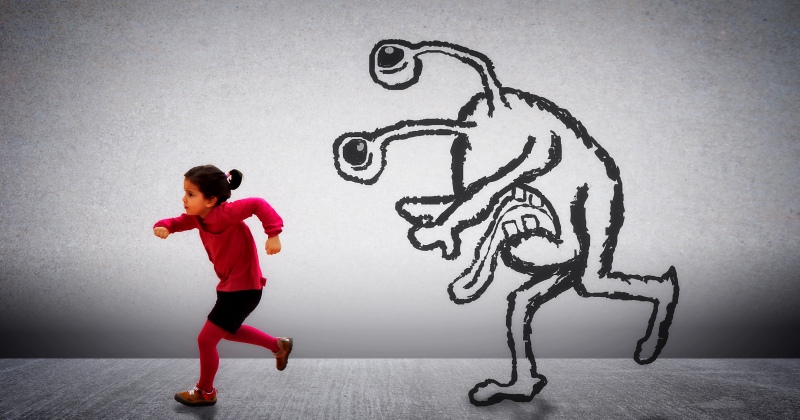
running away from a monster

Running Scared?

Most people manage to tolerate high levels of stress for a little while but what happens when a little while turns into longer and then longer still? 

Do you know how to keep your mind sharp and your body resilient while dealing with these highly stressful times? Do you know enough strategies to mitigate the effects of stress?  

Before take off, travellers on airplanes are reminded that they should put on their own oxygen masks first and then help those requiring assistance. Making sure you remain at your best physically and mentally is not only wise, it is the best way of ensuring that you will be able to continue looking after your loved ones.

My psychologist and my physician have my back. Who’s got yours? I encourage you to get the help you need to look after yourself!

I’m using a health video conferencing platform. You can talk with me from the comfort of your home. You’ve got questions about how this works? Ask for a free introduction session.

Nathalie Héloïse Graveline, Nurse Practitioner

In-person versus remote counselling sessions

I’ve always preferred face-to-face communication and no doubt always will.

Another truth about me is that I’m a good problem solver. I am one of these people who respond to challenges by “working the problem.” I love solving puzzles, to break problems down into manageable bits and to find solutions for the parts, and eventually for the whole.

COVID-19 is on everyone’s mind, too much, for some. 

Like everyone, I have my own list of worries. More than anything, I worry about the long term effects of this pandemic. I worry we might be treating this problem like a sprint and not a marathon. I worry we might be all so focussed on COVID-19, the virus, the pandemic and its immediate effect, that we might be neglecting other problems and in particular other health problems. I worry that people might not be looking after their whole health and might be neglecting to work at building resilience to deal with what is happening now and what remains to deal with ahead. Getting through this will require resilience and stamina. 

This time is a time for interdependence. We need to get “OK” with leaning on each other. If you’ve never learned to do that, if all your life you’ve been programmed to rely on yourself and on yourself alone then now is the time to challenge that way of doing things. 

I predict that it is those who are drawing on the necessary internal and external resources, those who are accepting help and who are offering help to others, who will fare the best.

The wise will use all the tools available, to not only survive but also thrive. In these times of social distancing, we are all looking for new ways of doing things. We are all looking for new ways to cope. If you are struggling to cope during these extra challenging times, know that you are not alone. Do not isolate in every sense of the word! Maintain social distancing, yes, but also reach out. Accept the help available so that you may thrive not only survive. If you have ways to help – help out! We’re in this together. If you don’t need help but wish to help let me know, let others know. Someone might just be looking for what you have to offer!

I’ve now got things setup to offer services by phone or via secure video (doxy.me). I’m working from home so I’ve expanded my hours of availability. 

If you’ve considered mental health counselling and never had the time or the opportunity to get started, then now might be the right time.

If your are a frontline worker and would like some support, I’m here.

I’m here for you all.

Let me help you get back on an Even Keel. 

Nathalie Héloïse Graveline

Nurse Practitioner

Even Keel Health 

Tired looking dog on leash

I’m so tired!

What is fatigue?

Fatigue is such a common complaint. It is one of those symptoms which is too often not getting proper attention.

Everyone has, from time to time, felt overtired. Feeling temporarily fatigued after working too hard for too long is easy to understand and typically resolved with getting proper rest. Most people know what to do about that kind of fatigue.

I want to discuss a different kind of fatigue — that unrelenting exhaustion, that “I’m so tired I could cry” kind of tiredness. I’m talking about the kind of fatigue which isn’t resolved by rest alone. That weariness which has developed over time and seems to sap your energy, your motivation, your concentration. The kind which has got you disconnecting for the world around you and has got you thinking that you are “not fit for human consumption.”

Fatigue has so many causes. 

Lifestyle factors

There are many lifestyle factors contributing to fatigue, such as the adverse effects of alcohol, drugs and certain over the counter medications such as allergy medications or cold remedies. Too much physical exertion or, conversely, a lack of exercise are also common causes. The better understood cause of fatigue is, of course, is lack of sleep or a lack of recuperative sleep. Or then again maybe a lack of quality sleep is not that well understood. With our frenetic schedules today we have created a problem by neglecting the need for good sleep hygiene.

Health conditions

A great many health conditions also present with fatigue as one of their symptoms. I won’t list them all. I will draw your attention to the fact that sometimes we attribute fatigue to one cause and we might have missed the culprit, or more likely the combination of culprits. 

Another thing to consider when assessing fatigue is that ironically, some of the medications used to treat certain medical conditions cause some fatigue. The intensity of this undesired effect varies widely from person to person. That’s why it is worthwhile to find out if a smaller dose or a change of medication is indicated for you. Going though life feeling fatigued all the time is not ok. 

Being a Nurse Practitioner with a practice focussed on mental health and addiction problems, I cannot talk about fatigue without including the fact that many mental health problems present with fatigue. If you’ve experienced grief before, you’ll remember that bone deep fatigue. People who suffer with depression also experience fatigue. So do those with PTSD and anxiety disorders.  Many of my patients recovering from opioid addiction started out with and continue to struggle with chronic pain. Chronic pain is almost always accompanied by fatigue.

Why am I writing about this? I know what it’s like. Fatigue is a difficult thing to tackle but I’m a puzzle solver. One of my former, long time patients called me her “health detective.” I hate knowing that many people are out there slugging their way through life feeling tired all the time. It doesn’t necessarily have to be that way. If you are tired of being tired and you’d like some help figuring out your fatigue puzzle, reach out. I’m here for you. 

Do you have what you need to get back on an even keel?

Happy New Year Everyone!

One of my plans for the next year is to set some new ground work with new information. If you’ve read my blog before, you might know that I feel strongly about the value of working near home, for personal and environmental benefits. Of course, not everyone is able to do this. But I want to work near home while contributing to the welfare of my community. That’s why I’ve created Even Keel Health, my private Nurse Practitioner practice.

So far, there aren’t many Nurse Practitioners in private practice. A private practice brings its own sort of challenges. One of which, is dealing with a provincial health care system which hasn’t yet made the requisite infrastructure changes to allow NPs to bill the Province for the health services they provide to its citizens.  

In Ontario, Nurse Practitioners have been providing health care in various communities and settings for more than 45 years. So we are not exactly new. However, our scope of practice and where we practice our profession is in constant evolution as is all of healthcare. This might, in part, explain why so many people are unclear about what we do and what we don’t do. 

A friend recently told me that someone vehemently argued with her that Nurse Practitioners only prescribe medications under the supervision of a physician. That isn’t so. 

Her story, however, served to reaffirm in me the belief that more needs to be done to dispel misinformation about NPs. Is misinformation keeping patients and providers from finding each other? 

You know what they say about those who assume. When you assume you make an ass of u and me. Please forgive the sassiness and consider this: I sure would love for people to feel comfortable to ask more questions about NPs. I would love it if people informed themselves instead of making assumptions. And I would love it if those who are misinformed stopped spreading inaccurate information.

This reflection led me to consider whether or not I am guilty of the same. Am I making assumptions about what health services, people in my community need?

Recently, I wrote a blog post titled Lead By Example! I encouraged people to behave as they would like others to behave. So here I am, putting that advice into practice.

I am aware of some of the gaps in the health services available in my region. I have taken some steps to inform myself about what is available and what is missing but I would really like to hear more about your experience seeking and accessing health services offered in this region.

Your answers to the survey will help me better understand what you are looking for and inform the choices I will make about how to best serve my community.

Please take 5 minutes to speak up via this survey. I am genuinely interested in learning and making informed decisions about how to best use my skills, knowledge and experience while serving my community. Spread the word the more answers the better! Answer now ! This will only be available until February 10 2020.

Nathalie Héloïse Graveline