Conundrums

The word conundrum recently came to my mind when a prospective patient missed his second scheduled introduction appointment. A conundrum is defined as a tricky or difficult situation.

It is quite the conundrum when one is feeling poorly with symptoms of mental illness, hopes to get help from a health care professional, yet cannot seem to find within what’s necessary to follow through and keep that appointment.

As a nurse practitioner who has been working with mentally ill individuals for many years, I understand that symptoms such as apathy, low motivation, anxiety, and impaired cognitive functions negatively impact a person’s ability to make and keep appointments.

As a health care provider, I naturally encounter my own conundrums.

How do I help someone who wants my help but cannot seem to make it to our scheduled sessions, or someone who takes weeks or months to respond to written correspondence?

How much of my available resources should go to helping those who seem to be unable to show up for the help available to them?

Generally speaking, I steer away from spending much of my time sending reminders to my patients. I believe that people are capable of taking some responsibility for their commitments to others and that once shown how, motivated people find ways to set their own reminders. “I have plenty of commitments and appointments to manage in my own life,” I tell myself.

That said, I also believe that some people who need mental health care also often have a lot of difficulty with making and keeping appointments and that they might benefit from some support with this for a while.

I have heard of providers who choose to work only with patients who are well enough to keep their appointments and who are able to promptly follow through on their recommendations. They prefer to work with people who are highly motivated and dependable. They also prefer to keep their schedule nicely packed and predictable. I understand that!

There is so much demand for the services we offer, why not focus our energies on “those who are really working at it,” right? Well, for many reasons, both professional and personal ones, I feel more lenient about this.

My experiences and beliefs have led me to introduce in my approach some strategies beneficial to those not quite ready for more structured health care services. I have had some success with my approach.

“Same Day Appointments”

What I offer, to those who want help but cannot seem to plan ahead and follow through, is something I refer to as a “same-day appointment.” I invite my struggling patients to text me or call me on my appointment days (currently Tuesdays, Wednesdays or Thursdays) and, if I have a space available that day, I can offer an appointment either later that day or if the timing is just right, we can sometimes talk right then.

While we work on their recovery plan, we explore strategies that might help them better manage their barriers to successfully working within a more structured routine and, when ready, they graduate to regularly scheduled appointments.

Same-day appointments have drawbacks. For instance, the patients who are only taking same-day appointments:

  • Cannot count on having a session available when they call in.
  • Cannot grow to rely on their “next upcoming appointment” for support, since they don’t have anything on the calendar to look forward to.
  • End up having less support than if they had a regularly scheduled appointment, simply because our schedules don’t always match up on short notice, and waiting for a good match-up can lead to longer intervals between sessions.

On the upside, however…

  • As a patient, finding help, even under less than ideal circumstances can be a blessing.
  • The patient who learns strategies to improve their reliability is eventually able to apply that skill in many areas of their life and with many other service providers.
  • Same day appointments allow me, the provider, to begin helping people whose lives are chaotic.
  • Booking ahead only those who mostly keep their appointment saves me from waiting around on people who don’t show up.
  • Fewer no-show or late cancellations save me from disappointing my other patients, who want an appointment but can’t get one, while unbeknownst to them, not long after an appointment ends up being wasted by a person not showing up for theirs.

About no-show or late cancellations fees

Here are a few reasons why I sometimes invoice my patients for their unattended sessions:

  • An unused appointment does not mean free time for me. In fact, I almost always end up having to follow up with the person who did not show up or cancelled late.
  • A no-show or late cancellation disrupts my workflow. Waiting for someone often leads to some amount of wasted or low productivity time.
  • A no-show or late cancellation does not allow me to fill the appointment and earn my fee from someone else.

Truth be told, I really hate to see anyone waste their hard-earned money. I give people many chances, and I never make the decision lightly, but when a person misses too many times, I start to charge them for their missed appointment or their late cancellation.

It’s also true that some people learn more from negative consequences than from too much leniency, so while it is always a hard decision for me, I remind myself that I sometimes I help by not being too lenient.

I hope that my reflections will lead to someone seeking help sooner rather than later from me, or from someone else who hopefully uses a similar approach.

Unfortunately, this prospective patient of mine is not my first patient to have struggled to get help, nor will he be the last person I will encounter who is not getting help promptly because he is feeling so poorly.

Let’s all try to be a bit more lenient and make it as easy as possible for people to get started on their road to recovery.

Nathalie

Summer is here and school is out!

The change in routines these two things bring, might present you with the perfect opportunity to get started with a therapist.

Are you the type of person to “hang in there” until the break is finally here? Do you often think to yourself, if I can just finish this one project, I’ll take the time to deal with my own needs next? 

Are you familiar with the expression “the straw that broke the camel’s back”? Personally, I prefer the French equivalent ,“la goutte qui fait déborder le vase” ; either one reminds us that there is such a thing as one too many. 

If you feel close to that tipping point, perhaps, now is the time to get some help to evaluate your situation and figure out how to alter your course, before the overflow or the breakdown. 

I’m just back from taking a restful break from work and happen to have some openings. 

You are wondering if I can help or if I’m the right fit for you. 

You’ve read my website and still have some questions.

Book a free introduction session, meet me, ask your questions and see where those first few steps take us.  

Currently, I’m using a telemedicine video conferencing platform. You can talk with me from the comfort of your home.

Living in a pressure cooker?

For some people home isn’t a safe haven. I know. In the course of my professional life, I encountered and cared for many women, men and children who experienced abuse in their homes. Their stories came to mind, earlier today, as I meditated and took in the beauty of my surroundings. I was watching five goldfinches bickering over access to the feeder and boom, just like that I connected to some stored away memories. 

Why write about it? I’m writing because we need to talk about it. We all agree that the added stressors brought on by this pandemic are bringing out our best and worst selves and everything in between. 

What can we do about it?

It would be wise to keep ourselves in check 

  • Are you…
    • … growing impatient and irritable? 
    • … snapping at people? Getting short-fused?
    • … becoming rude? 
    • … isolating, feeling unfit for human interactions?

We need to protect ourselves and our kids

  • Are you …
    • … walking on egg shells? 
    • … hyper alert, constantly trying to anticipate someone else’s needs to help keep the peace? 
    • … feeling triggered? 
      • Sometimes highly stressful situations bring back unresolved past experiences and make it more difficult to cope with the current situation.
    • … worried about your safety or the safety of your kids? 
    • … worried about how your kids are coping?
    • … wishing you had someone else to think with? 

We need to be on the look out for people who need help

  • Are you …
    • … disengaging from the people around you, worried about getting in the middle of something? 
    • … trying to convince yourself that something not right is none of your business?

Help is available!

It is important to restore the balance; level the scale. Imagine on one side of this scale all the stuff which contributes to raising the stress level and on the other side of that scale all which helps us cope and thrive. 

We can positively affect the balance in two ways. We can work to decrease some of what is in the stress side and we can increase what is in the coping side. 

As an Nurse Practitioner, I have the knowledge and experience to help you with decreasing your stress and improving your resilience:

  • Together we can figure out a way to safety.
  • Together we can equip you to deal with those in your life who are not coping well. 
  • Together we can affect what is in your scale and restore some form of equilibrium.

Become your best self, not your worst! It is possible.

Worried about finding some privacy? 

We can talk over via a video conferencing platform or over the phone. Whether you are sitting in your car or walking around the block, reach out! We’ll figure out  “the how”  together. 

Are you anticipating many barriers? Have you got many questions? Book a free introduction session to see if we can work them out together. 

photo credit Lucas VanOort

person keeping balanced on one foot

Done with feeling off-kilter?

I don’t know about you but I’m ready to shift from surviving to thriving.

In the face of danger, our first response is often to run for our lives or to freeze. After the initial shock, we fight, we get busy dealing with the basic necessities of life. We function in survival mode. After a beat or two, or more, we then get into working the problem. Depending on our training and our past experience with traumatic events we go through the steps with varying speed and efficiency.

“Work the problem,” that’s one of my mantras these days. Repeating it to myself, keeps me from getting overwhelmed. Another good expression to remember is “two heads are better than one.” You may already know that I love puzzles, all kinds of puzzles. I’d like to help you with yours.

Too much stress can mess with your mental and physical health. Be brave! Be wise! Don’t wait! Get help!

Hire a nurse practitioner, a compassionate health puzzle solver. I’m here to help you get back on an even keel.

Need another reason? Looking after yourself well, will enable you to better look after those you love. It is the most worthwhile investment!

Currently, I’m using a health video conferencing platform. You can talk with me from the comfort of your home.

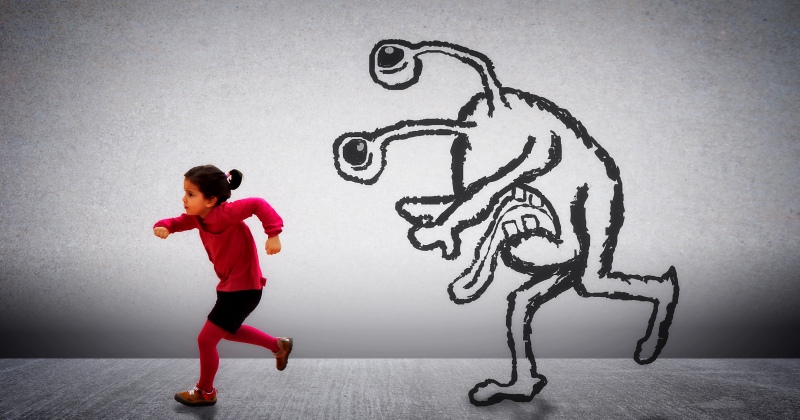
running away from a monster

Running Scared?

Most people manage to tolerate high levels of stress for a little while but what happens when a little while turns into longer and then longer still? 

Do you know how to keep your mind sharp and your body resilient while dealing with these highly stressful times? Do you know enough strategies to mitigate the effects of stress?  

Before take off, travellers on airplanes are reminded that they should put on their own oxygen masks first and then help those requiring assistance. Making sure you remain at your best physically and mentally is not only wise, it is the best way of ensuring that you will be able to continue looking after your loved ones.

My psychologist and my physician have my back. Who’s got yours? I encourage you to get the help you need to look after yourself!

I’m using a health video conferencing platform. You can talk with me from the comfort of your home. You’ve got questions about how this works? Ask for a free introduction session.

Nathalie Héloïse Graveline, Nurse Practitioner